Sure, you're immature and dreading the holidays; now what?
We are all immature. The golden question is how are YOU immature? What skills do you still need to learn to increase your maturity and make life a bit easier?

Kia ora koutou! (Hello all in te reo Maori),
Last week I wrote briefly about how healing fantasies and role-selfs can get in the way of realistic, mature, and intentional holidays.
My personal philosophy is that we are all doing our best and we all have more to learn. As we learn more, we can do better.
I’m suggesting we are all immature. We all have skills gaps, old patterns, and predilections that keep us stuck (e.g. I expect my work product to be Michel Jordan level at all times then when I achieve moments of this success, I move the goalposts and raise the bar….it’s so weird that I used to feel constantly dissatisfied with my professional performance.)

The golden question is how are YOU immature? What skills do you still need to learn to increase your maturity and your ease navigating the world?
Each of our particular brands of immaturity is a lovely blend of bio-temperament and learning history nested within multiple levels of systems and context (see below).
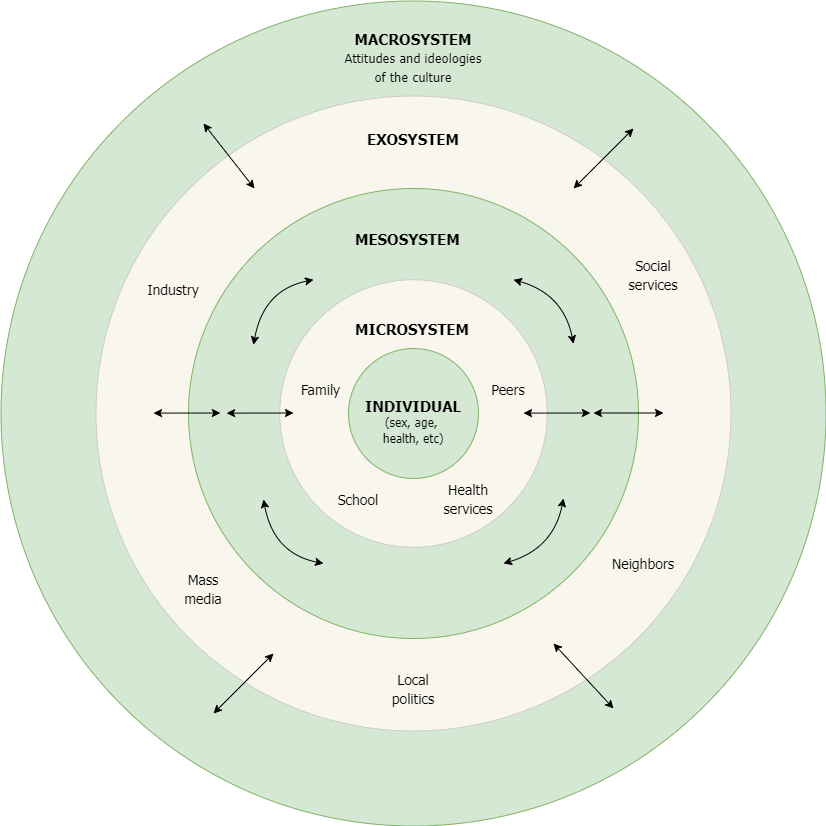
It is tempting to get lost in WHY AM I THIS WAY. But I don’t think insight is a crucial prerequisite for growth. I find this helpful for myself (to a point) *and* I think you can make meaningful change without retrenching your childhood.
Three tools to learn about your immaturity
Here are a few tools I enjoy for thinking more about individual immaturity and skill gaps:
The RHETI enneagram test I have no affiliation with this institution and won’t benefit from any money or attention you give them. Full disclosure, I don’t know of any research or scientific support for enneagrams. This suggestion is solely in the “I have found this to be useful for me and my friends, enjoy if it is useful for you too.”
Dr. Gibson has a wonderful appendix in her book that lists the characteristics of a mature person. Brief summary here
What are some personality characteristics of a person who is capable of a healthy relationship?
One is sensitive and can tune in to the other person
One’s personality is complex enough to support individuality (the partner doesn’t have to think, believe, act, do things exactly like the other person to make them feel secure)
One automatically takes the other person into account
One is able to take turns with problem-solving, compromise
One is creative and resilient
One knows their own needs and preference and can voice them
One can tolerate conflict
One can be vulnerable
One can manage having competing needs
Mature coping mechanisms like humor, or asking for support”
Here is the Dr Kerry cocktail napkin version of the key skills we need to show up for life. This is loosely based on the core skills of psychological flexibility in Acceptance and Commitment Therapy/Training as summarized in Luoma, J. B., Hayes, S. C., & Walser, R. D. (2007). Learning ACT: An acceptance & commitment therapy skills-training manual for therapists. New Harbinger Publications.:
Awareness and presence pillar: How much are you able to be present right now in this moment? Do you notice yourself getting stuck in stories about the past or fantasies about the future? Can you notice internal sensations like physical pain, emotions, thoughts and urges without getting trapped or consumed by them?
Openness to internal experiences and limits of control pillar: How much can you accept things as they are? How much do you fight with reality, overhelping or taking over-responsibility for things that you don’t have control over? Notice the things you work hard to avoid (like thoughts, emotions, memories, or sensations). How do you avoid them?
Engagement with creating a valued life pillar: Are you an active operator creating your life or do you feel reactive and lost in your life? Do you know where you are going or do you feel directionless? Have you earned your own trust to keep going in the same direction? Are you persistent or fickle? Do you have a healthy sense of mortality?
Kerry example: My brain works very fast. I am heart-centered and follow my wild energy and emotion. I have the energy and enthusiasm to start a new project every day. The necessary shadow side of this is that I am weak at following through. The more honest I am about this, the more I can build intervention and prevention strategies so my life isn’t a long charred pathway of half done relationships and half assed work (oh the shame that comes up when I type that). So now I spend a lot of my energy soothing myself when I get bored or frustrated then navigating myself back to complete a job or have the hard conversation.
There is no right answer or perfectly constructed person. I do think a path to peace is understanding ourselves just as we are, so we can provide balance and supports where we have gaps.
Look at all the skills above: What are your strengths? Where do you still have more to learn?
Thank you again for your readership. Please ask any questions in the comments (or just reply to this email!) Next week we’ll discuss a few concrete skills for interacting with difficult loved ones.
Warmly, Kerry